
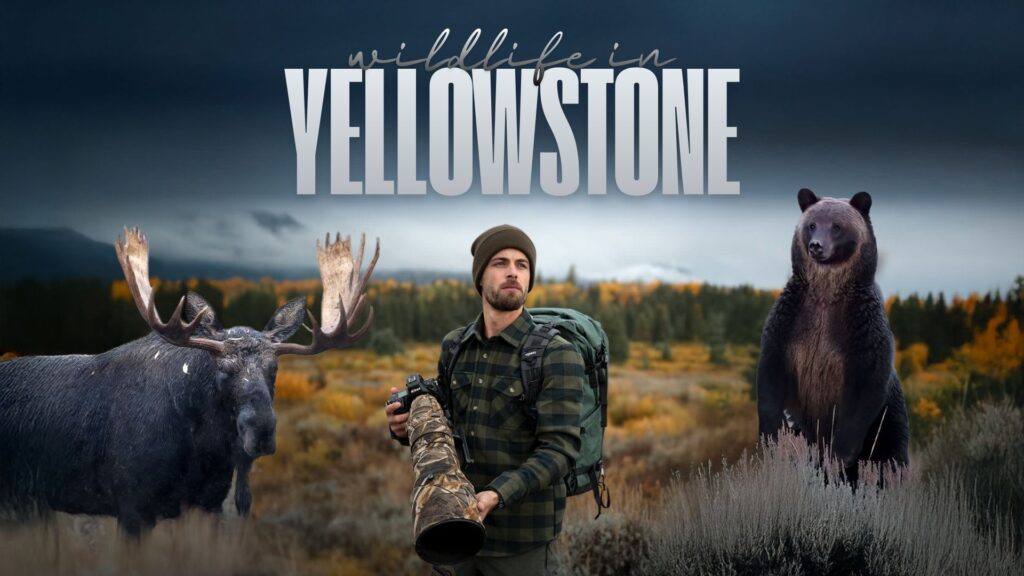
A photographic journey to a place where the earth breathes, nature dictates the rhythm, and man truly learns to observe.
A trip to Yellowstone doesn’t begin with a specific destination. It’s such a vast and inspiring place that trying to “see it all” only risks losing its essence. It’s better to start with the details: a grizzly bear track imprinted in the mud, for example. It was that very mark that made us realize we were entering a world apart, where every step demands attention and respect.
Walking through forests, valleys, and escarpments means coming into contact with a living, breathing, moving land that tells ancient stories. Yellowstone offers no shortcuts: every corner has its own rhythm, every environment is dynamic and constantly changing. To truly experience it, you need to slow down, observe, and learn to be a discreet guest.
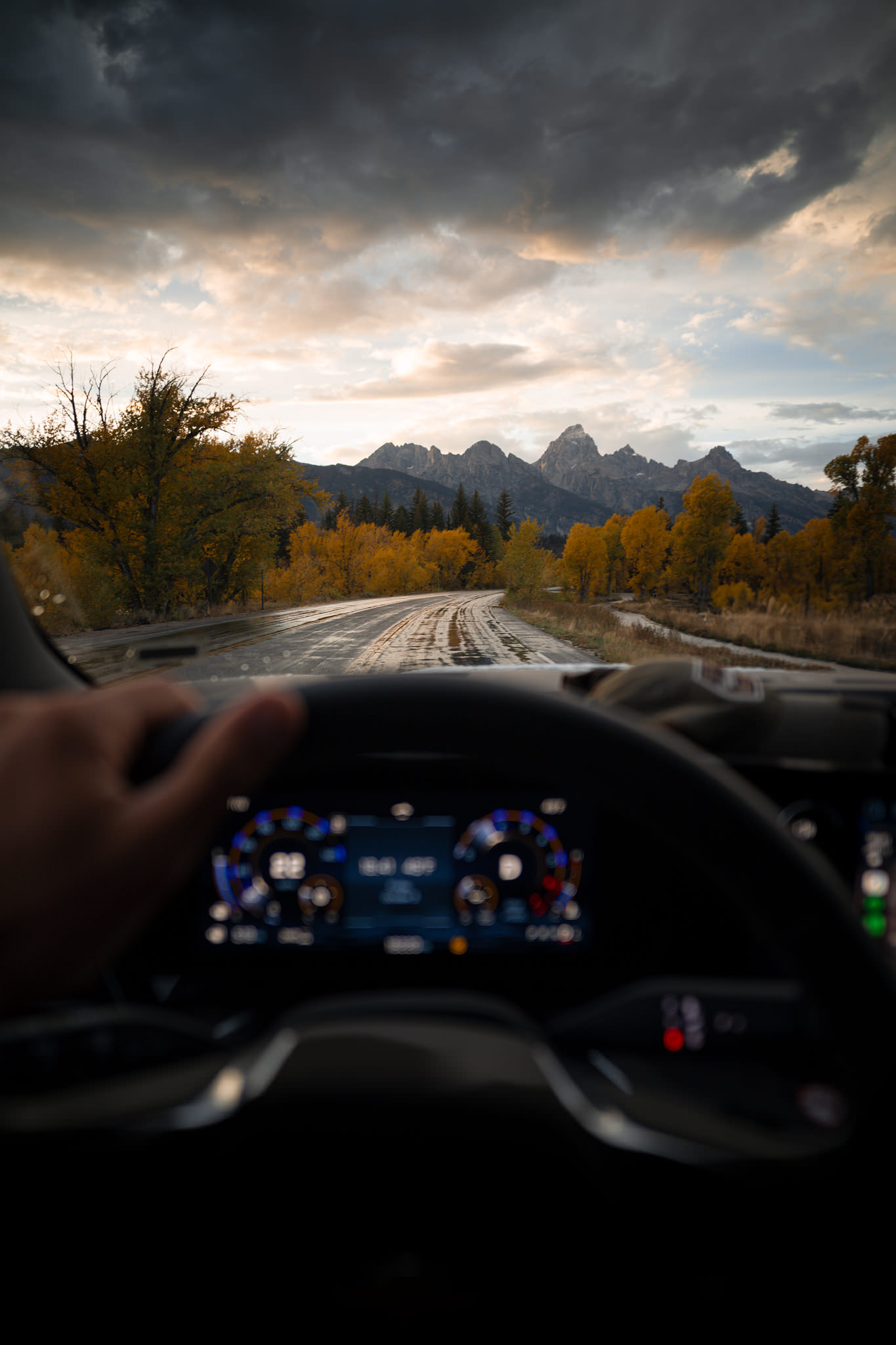
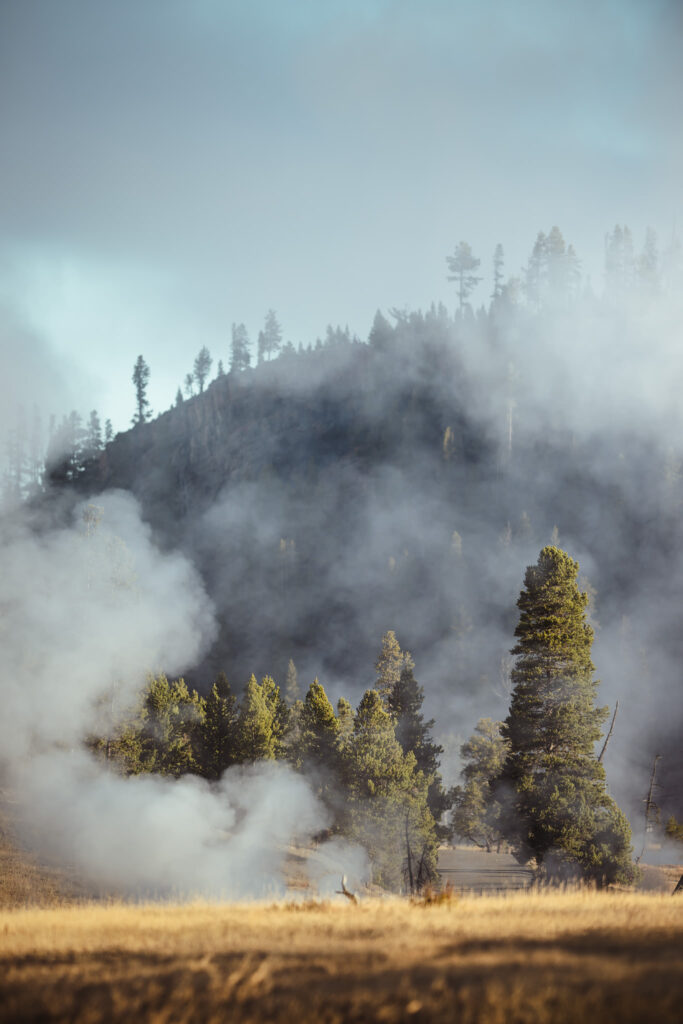
Between geysers and impossible colors
The heart of the park beats beneath our feet. Erupting geysers, bubbling hot springs, and steam rising from the ground tell the story of an ever-evolving geology.
Along the trails, you can sense the warmth of the earth, the intense smell of sulfur, and an almost surreal sensation: that of walking through a place still in transformation. The landscapes change rapidly, from forests to meadows, from silent lakes to energizing thermal baths.
Of all the wonders, the Grand Prismatic Spring is perhaps the most iconic: an explosion of colors ranging from deep blue to bright red, passing through shades of green and orange. Even from a distance, its energy is tangible, almost hypnotic.
Wild Encounters
Yellowstone is home to extraordinary wildlife: grizzly and black bears, wolves, bison, deer, and elk. Here, every animal has a specific role, and every encounter is a privilege.
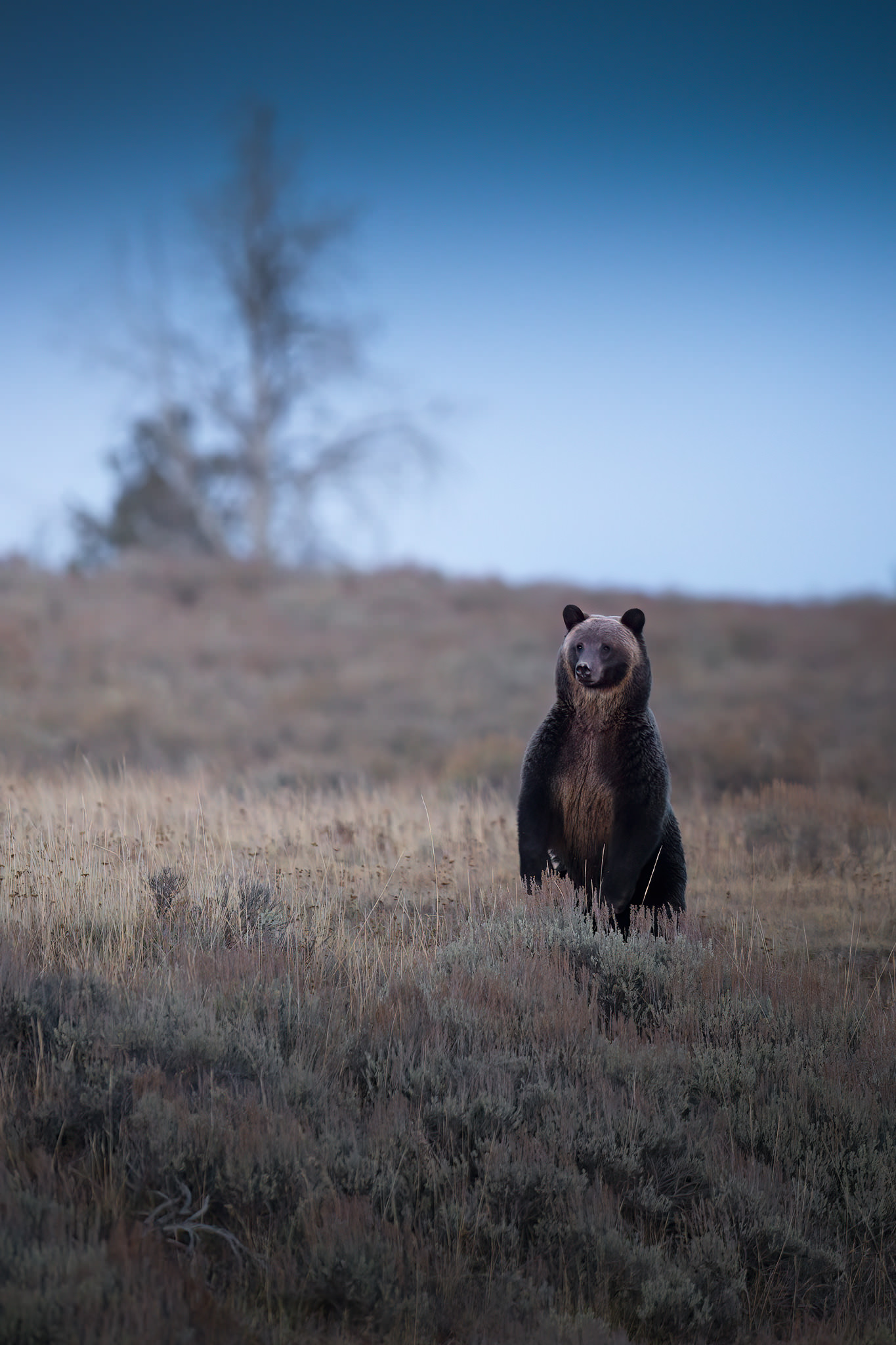
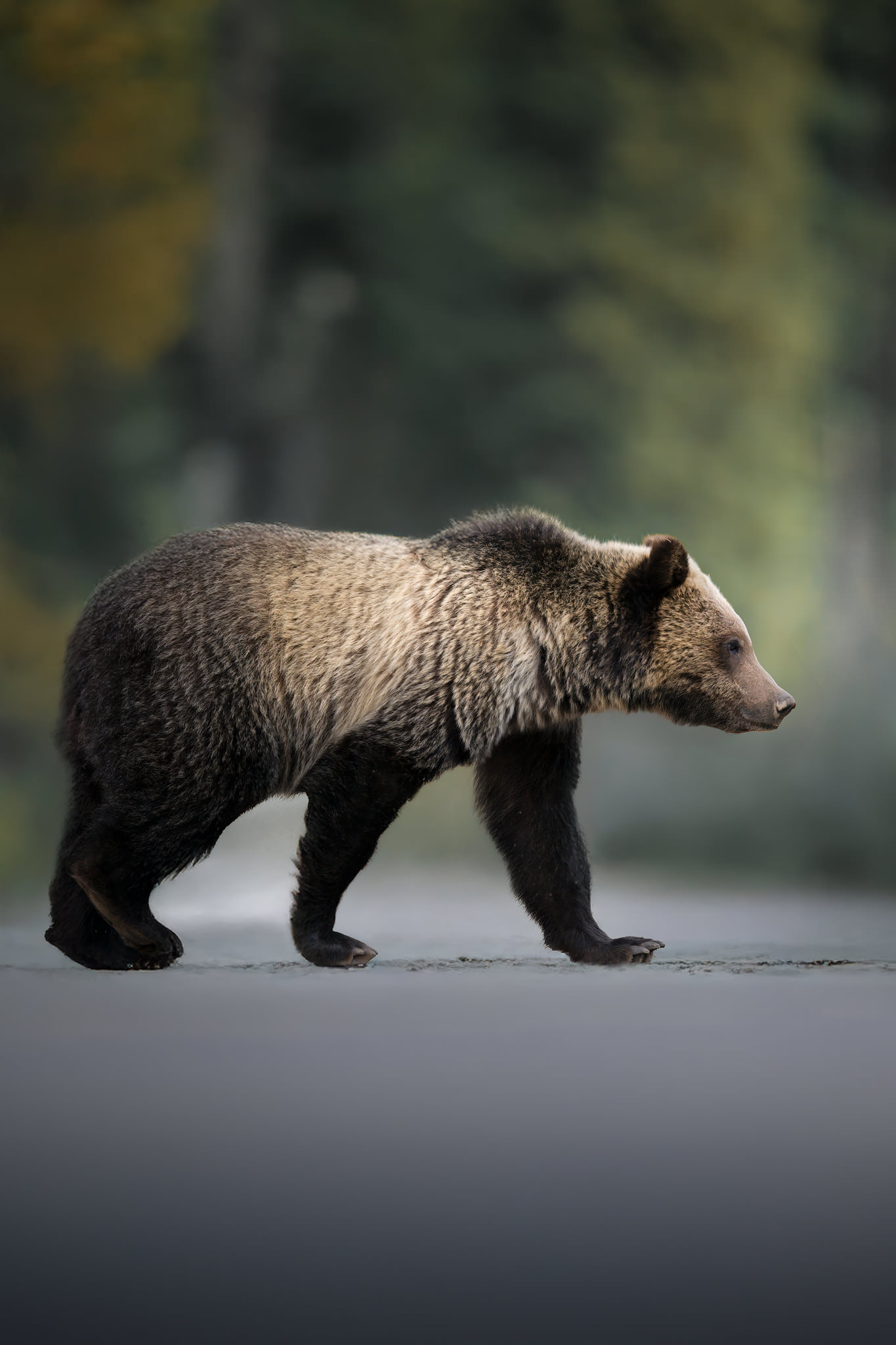
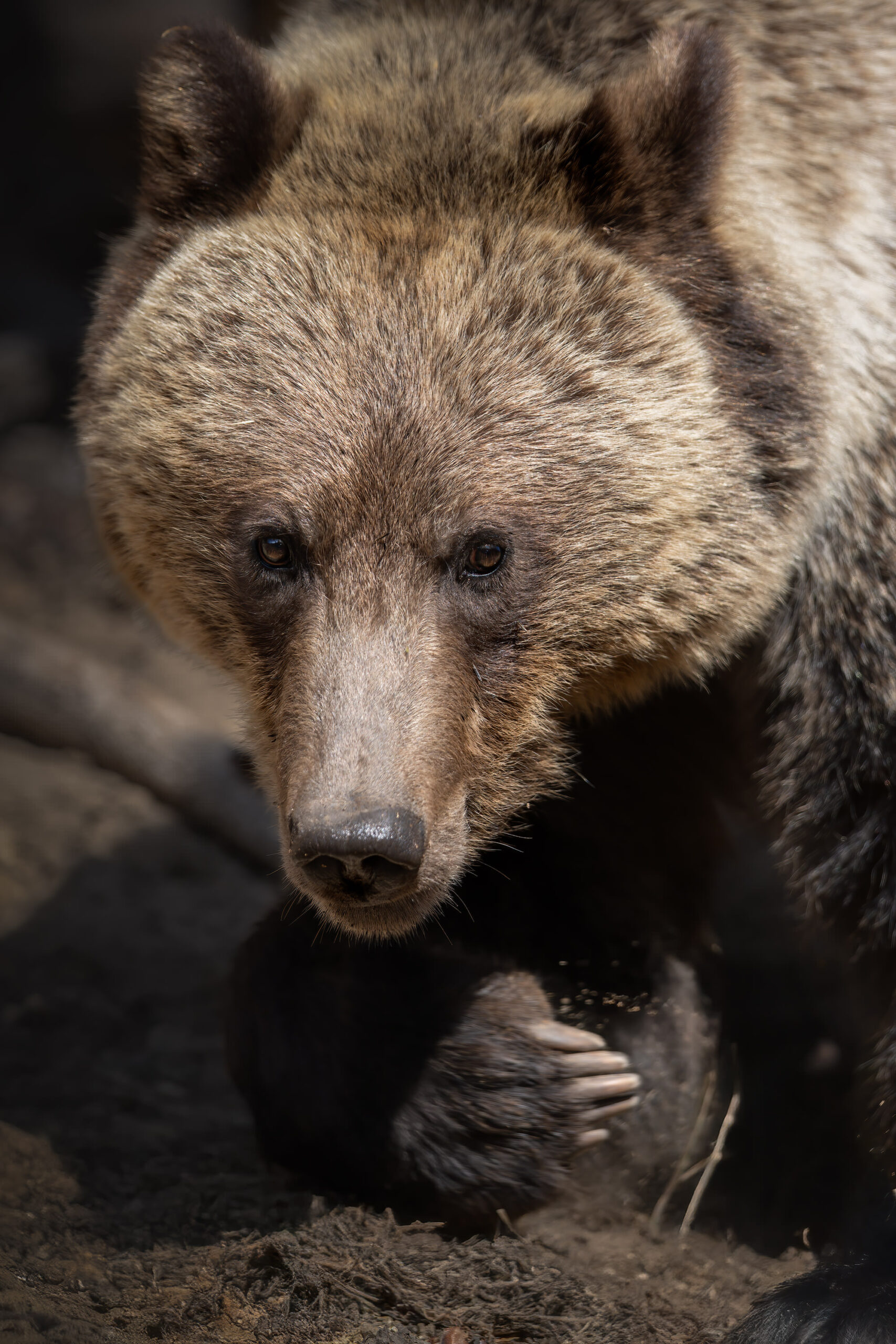
We still remember that afternoon: the warm light filtered between the rocky ridges when a movement caught our attention. A grizzly bear, about 50 meters away from us, was advancing at a slow but determined pace. At one point, it stood on its hind legs, motionless, as if to better observe the valley. A typical gesture, useful for compensating for limited vision and gaining a better perspective.
For a few moments, time seemed to stand still. Then, with complete ease, the bear resumed its march, gliding past us and disappearing into the landscape.
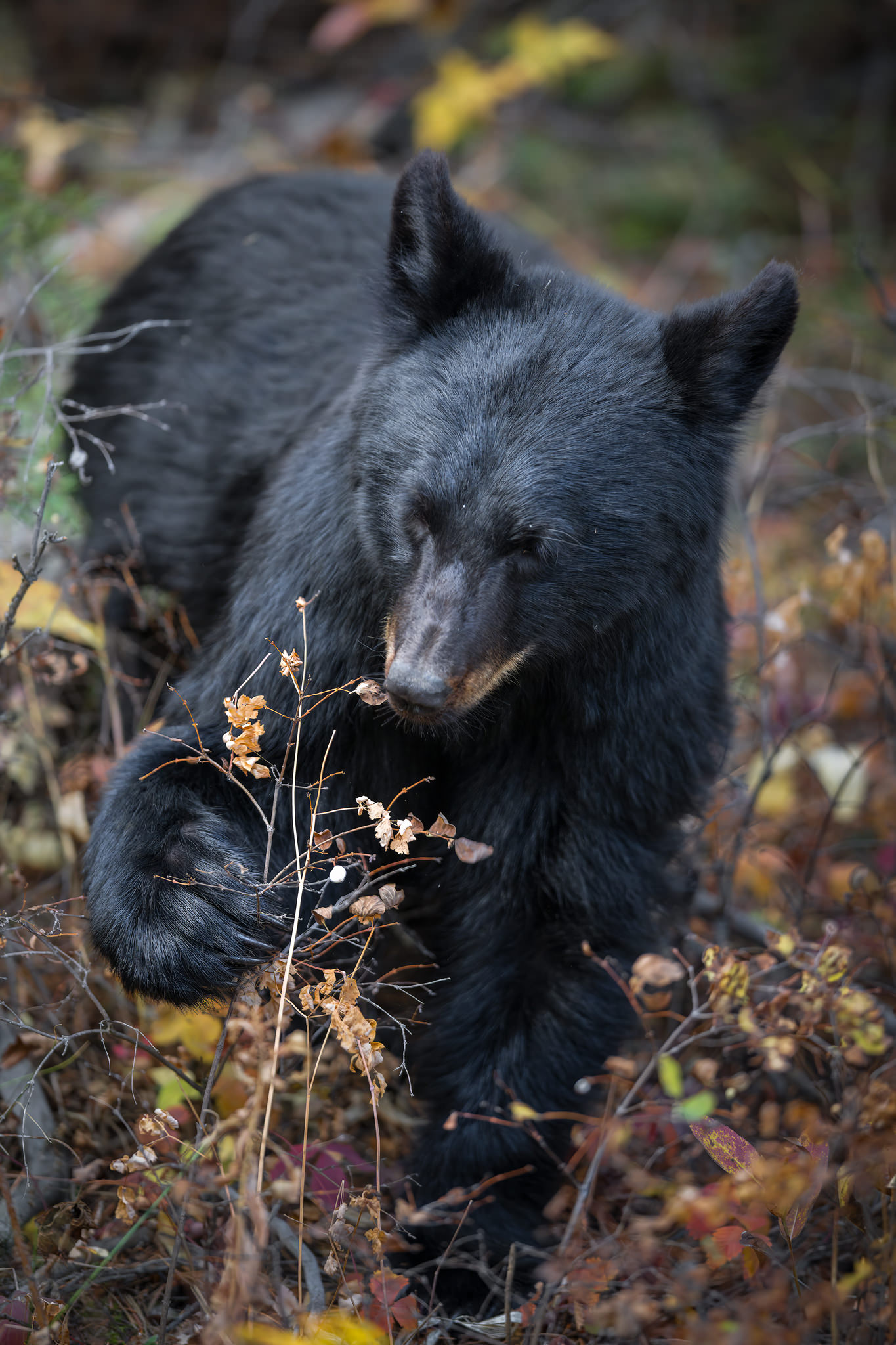
Shortly afterward, a black bear, smaller and more agile, watched us curiously before disappearing into the undergrowth. In those moments, we were neither spectators nor protagonists: simply present, part of an ancient balance.
The language of silence
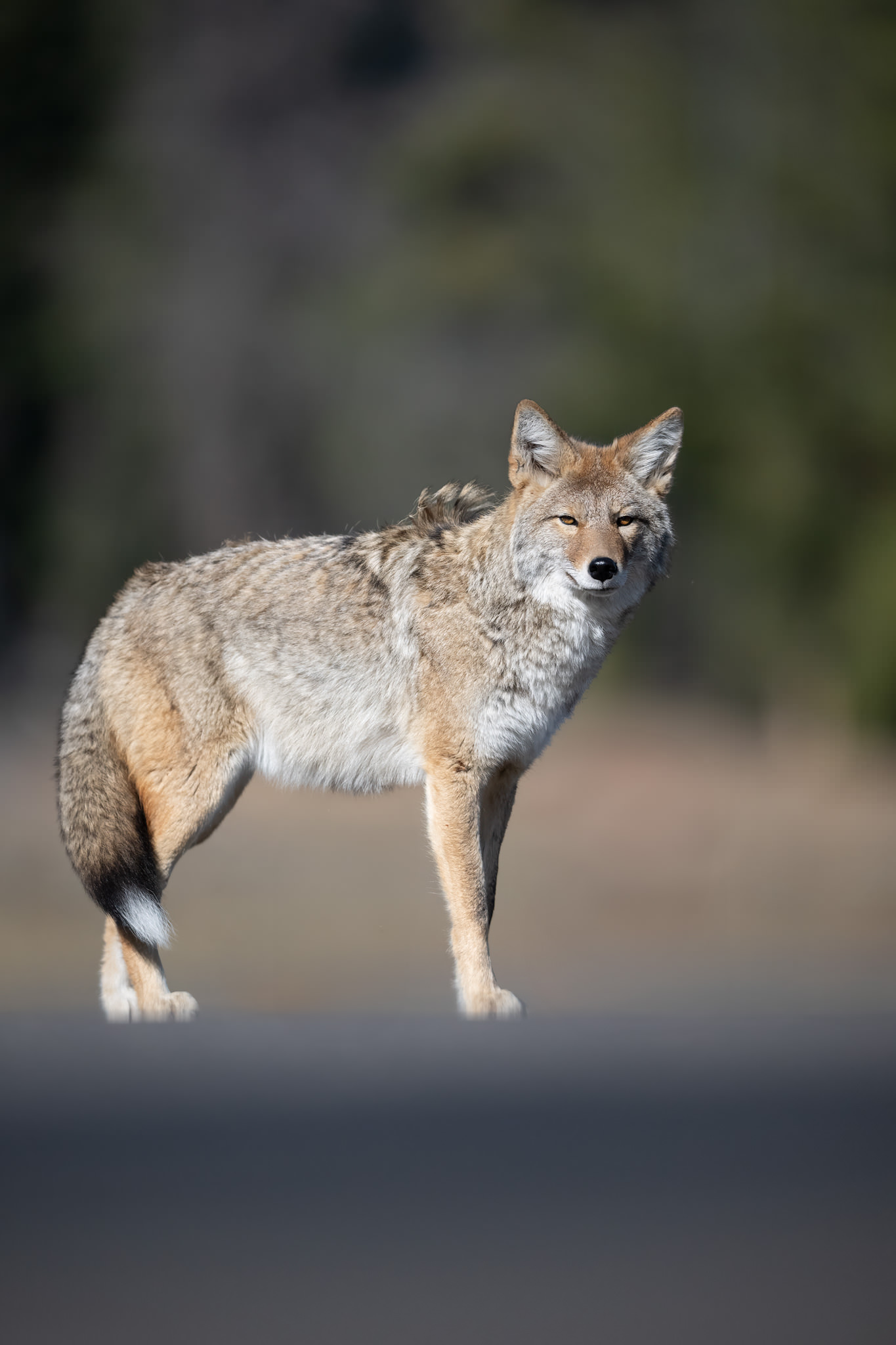
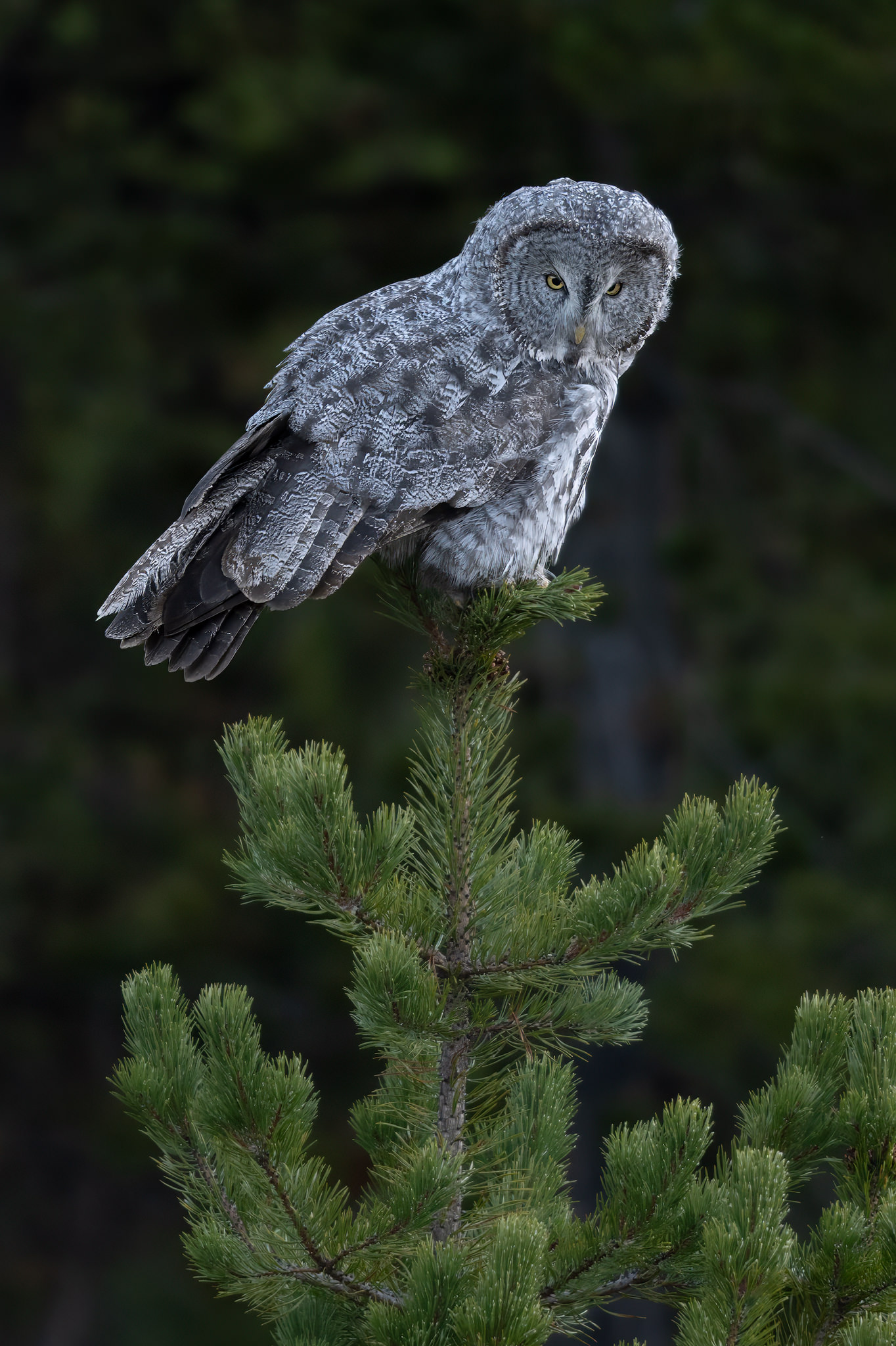
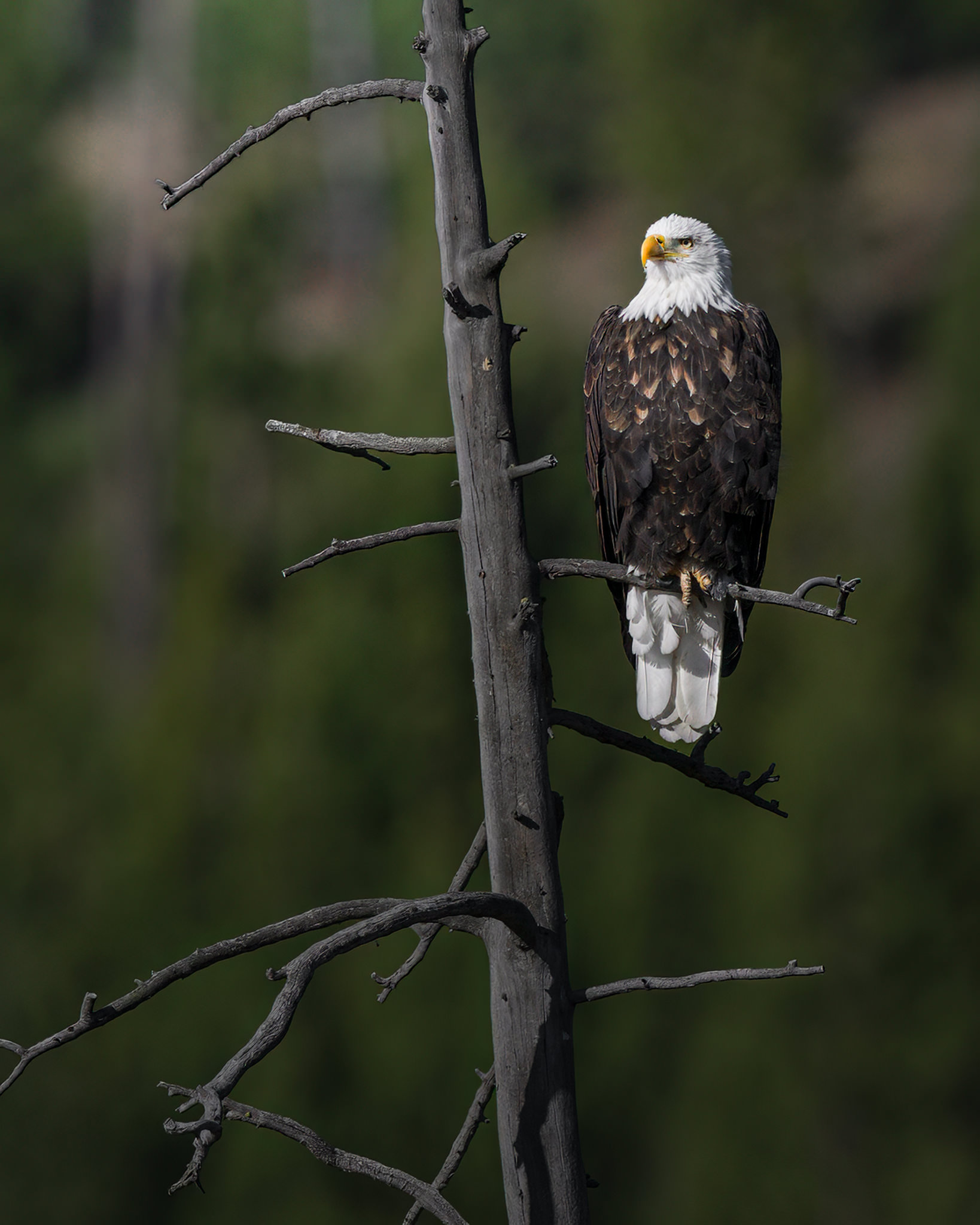
In Yellowstone, silence isn’t empty; it’s full of meaning. A rustle in the bushes, the call of an eagle, or the light footsteps of a coyote speak of a life that moves unseen.
There is no cruelty here, only balance. Every hunt, every escape, every gesture is part of an invisible but perfect natural law.
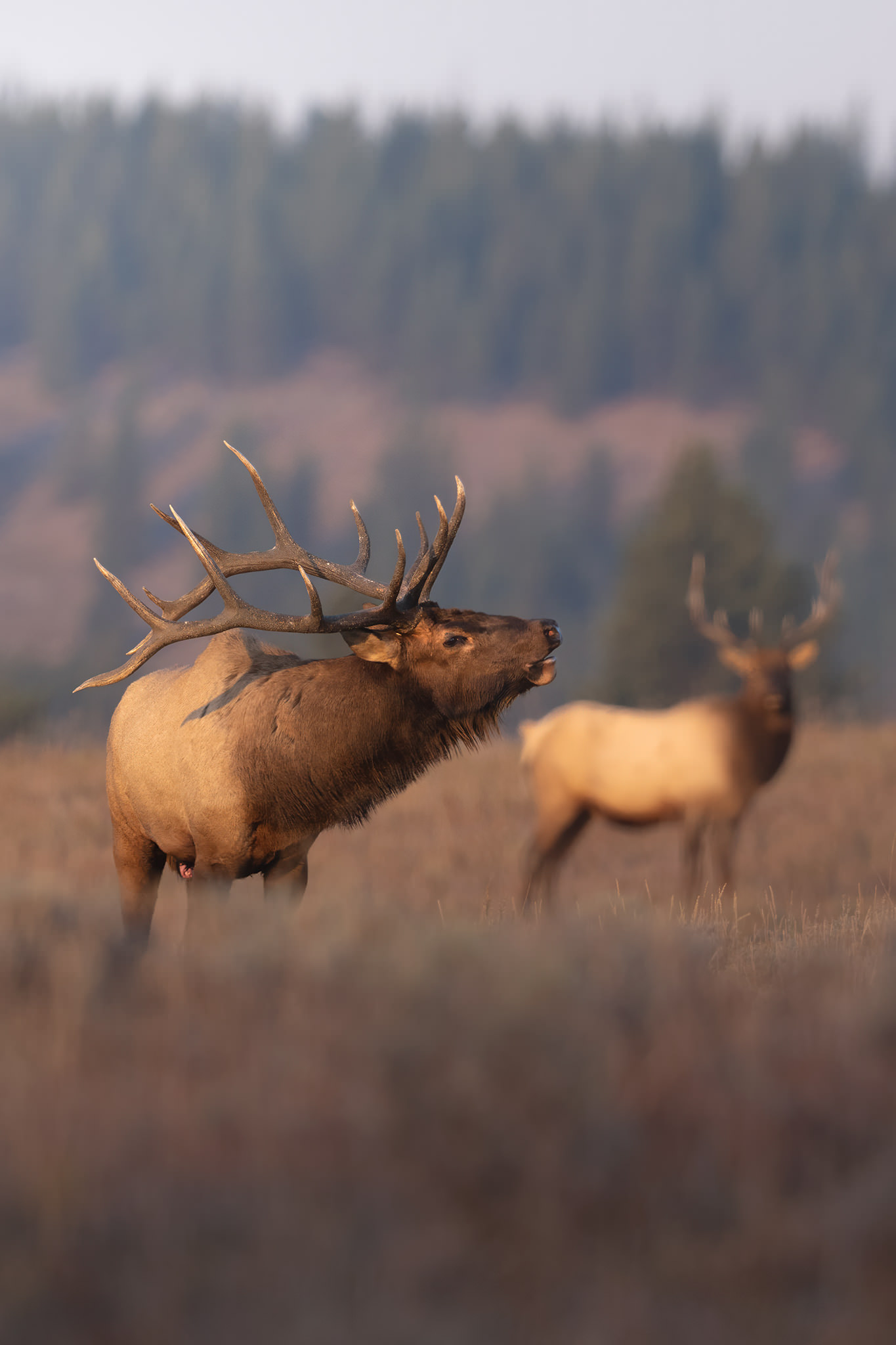
One October morning, just before dawn, we were enveloped by the calls of rutting elk. Their cry drifted through the forest like a distant melody, clear and vibrant. Moving slowly through the mist, we managed to find the perfect spot to observe and photograph without disturbing anyone.
Balances in motion
Yellowstone is made of contrasts: the heat of the geysers against the biting cold of dawn, the slowness of the bison against the speed of the predators, the silence against sudden, intense sounds.
In this age-old balance, we also encountered a male moose in the midst of its mating season. Imposing, with majestic antlers and a commanding presence, he moved slowly but with a force ready to explode at any moment.
It may seem awkward, but it only takes a moment to understand how powerful and unpredictable it is. It’s precisely this combination of strength and vulnerability that makes it one of the most fascinating animals to observe.

Travel fragments
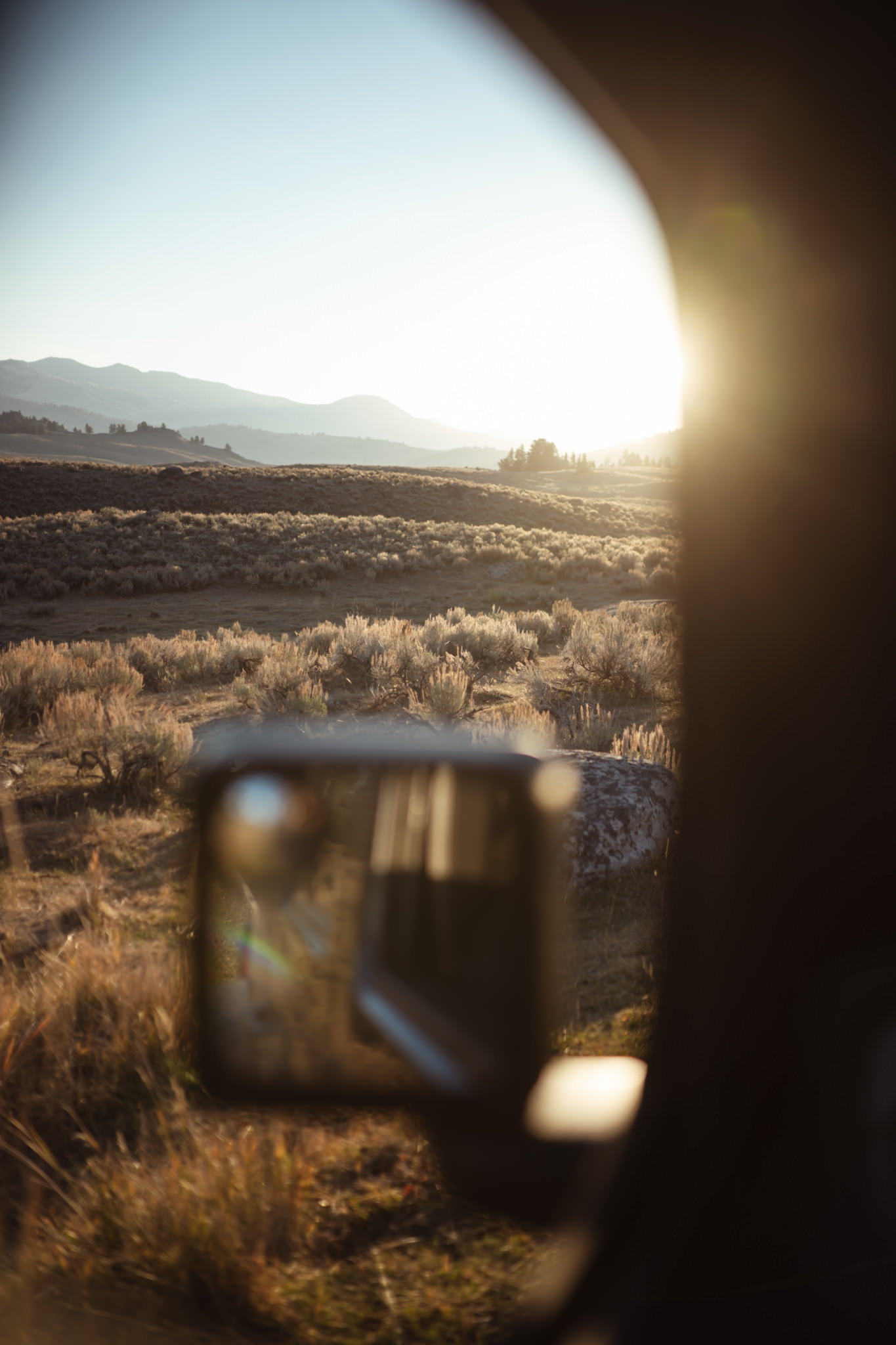
After more than 4,000 km through valleys, forests and incredible landscapes, we realized that the value of Yellowstone lies not in the numbers: not in the animals sighted, nor in the photographs collected.
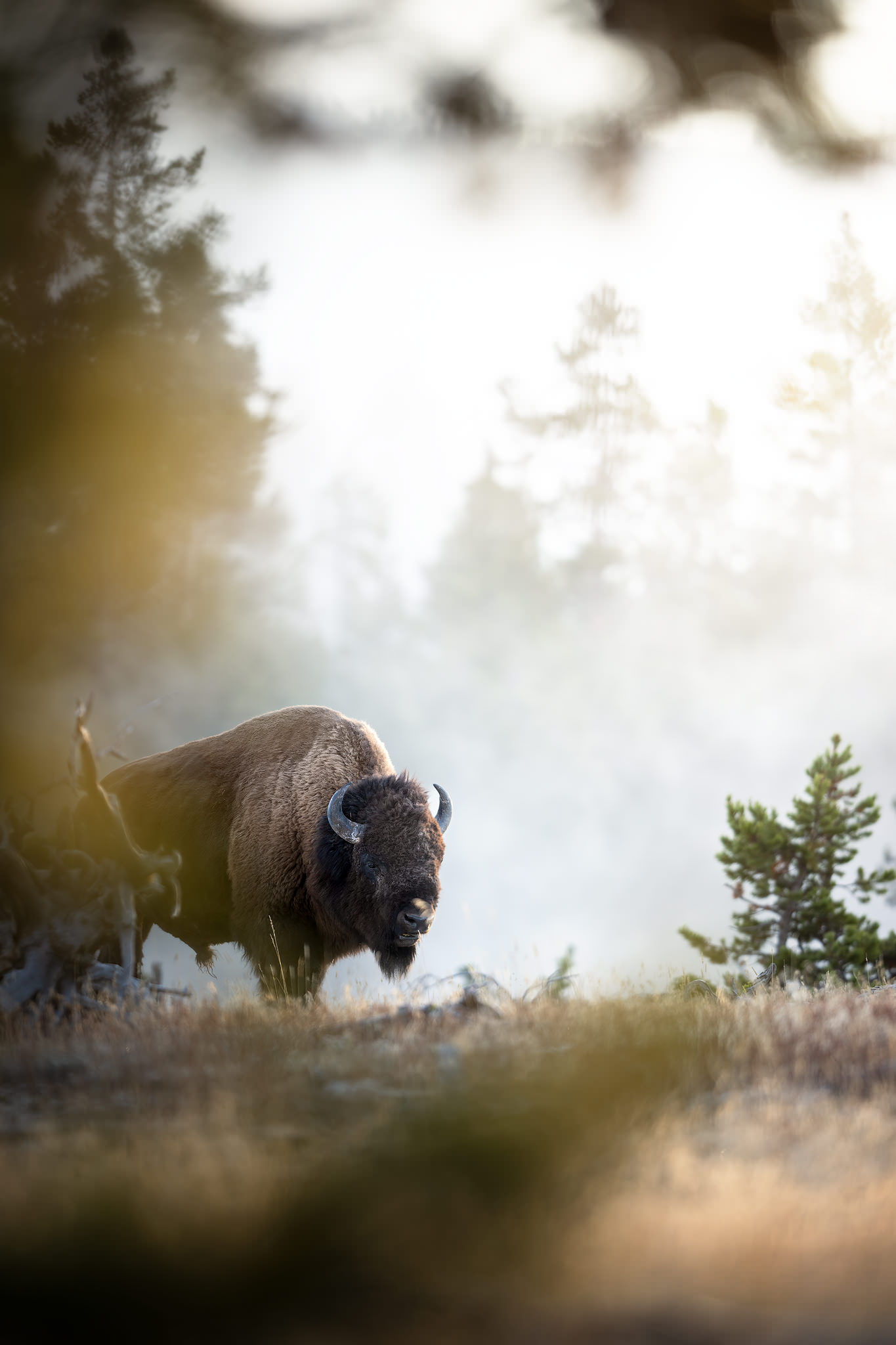
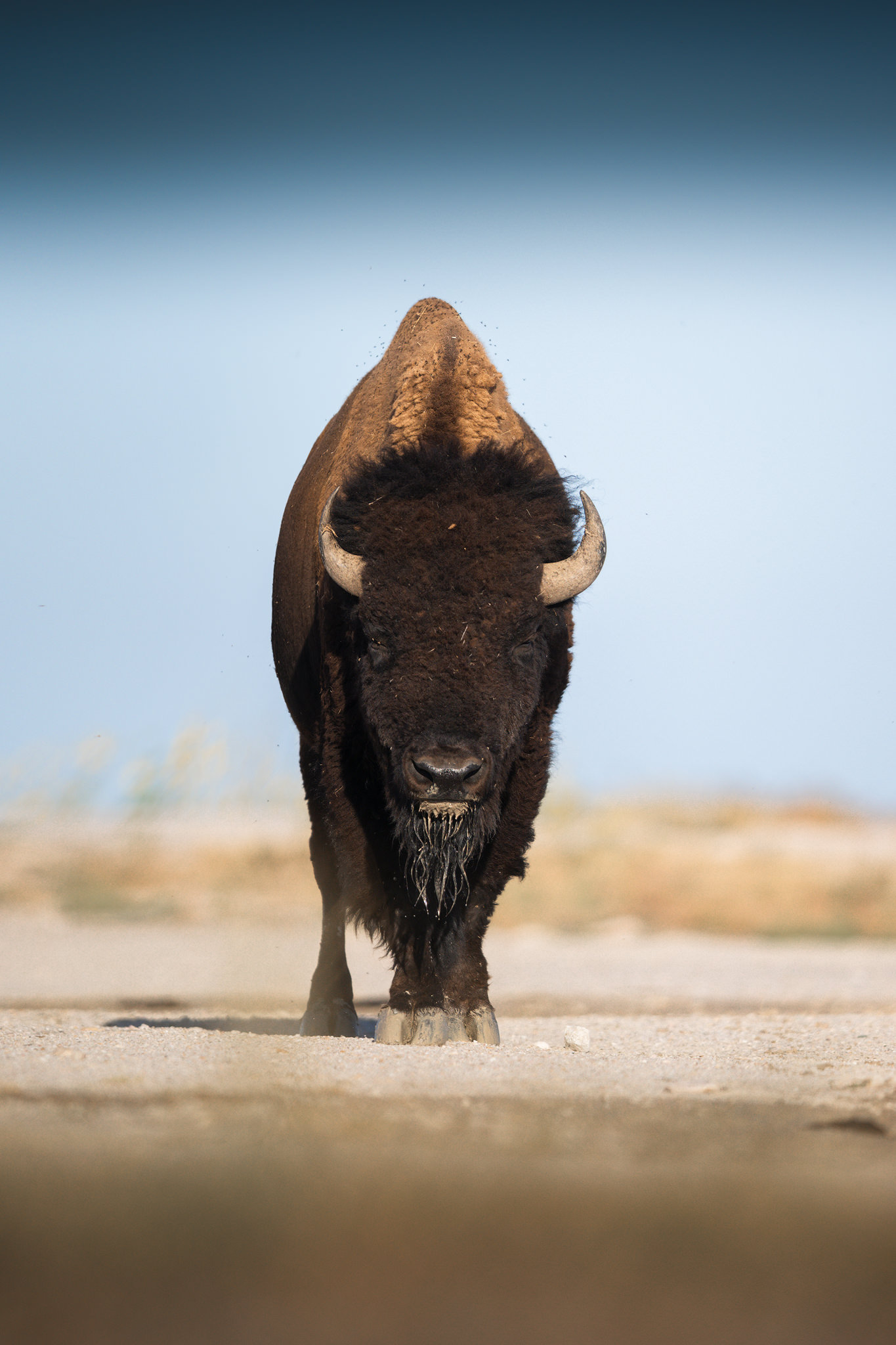
On the last day, at sunset, we stopped on a hill to observe a herd of bison. The warm light enveloped everything, transforming the landscape into a silent scene. We watched them for a long time, unhurriedly, following their slow, harmonious movements.
At that moment it was clear: Yellowstone teaches you to slow down, to observe, to be present.
Why come back
Yellowstone isn’t a place you can explore in a single trip. It changes with the seasons, the light, the climate, and the life that passes through it every day.
Returning there always means finding something different: a previously unseen scene, a new light on a familiar landscape, an unexpected encounter. For photography lovers, it’s an infinite natural laboratory, where every shot is unique.
But the real reason to return isn’t just photography. It’s the chance to reconnect with a more authentic pace, far from the rush, where every detail matters.
And, perhaps, each return is a way to see not only Yellowstone, but also ourselves, with different eyes.
MY YELLOWSTONE SETUP
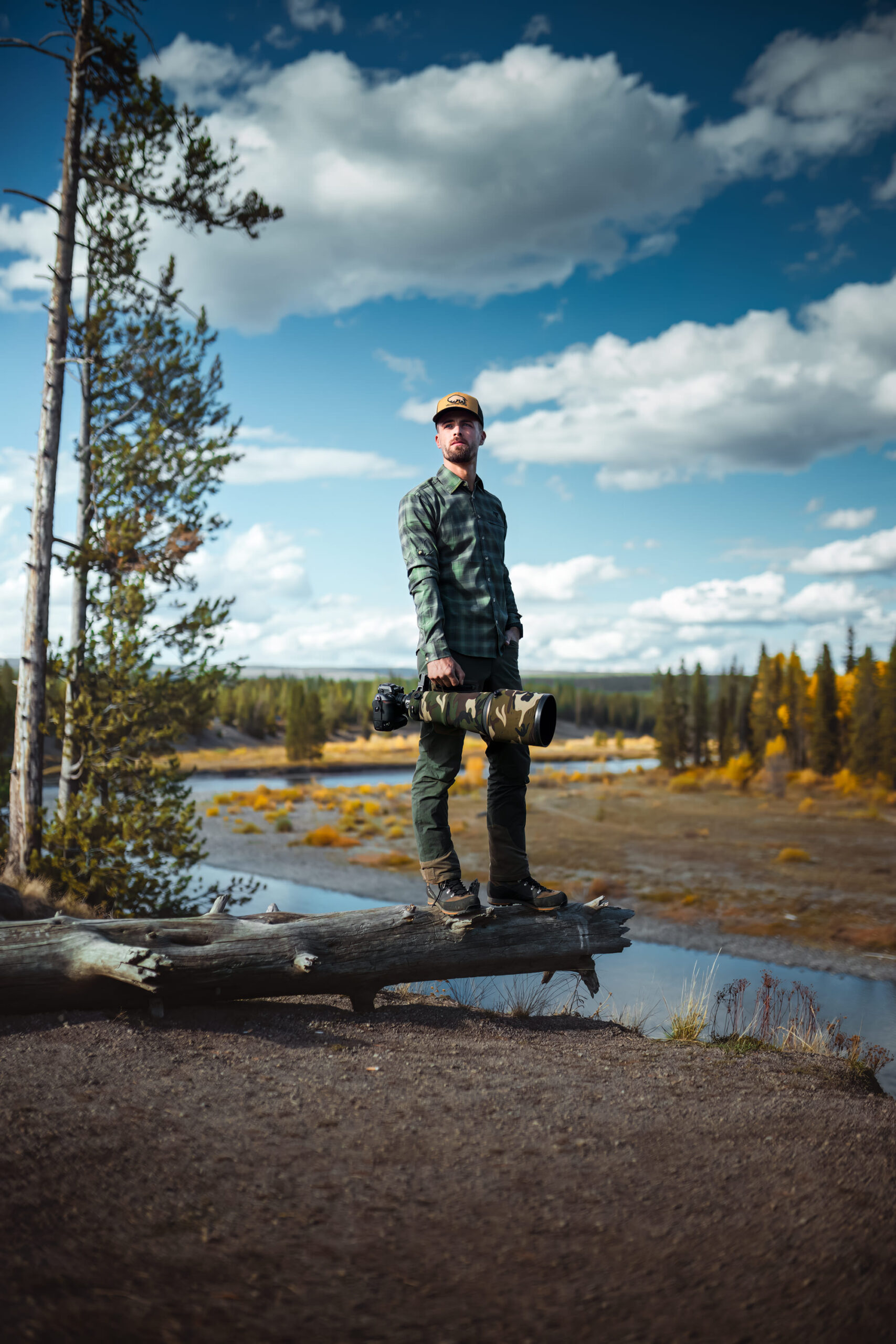
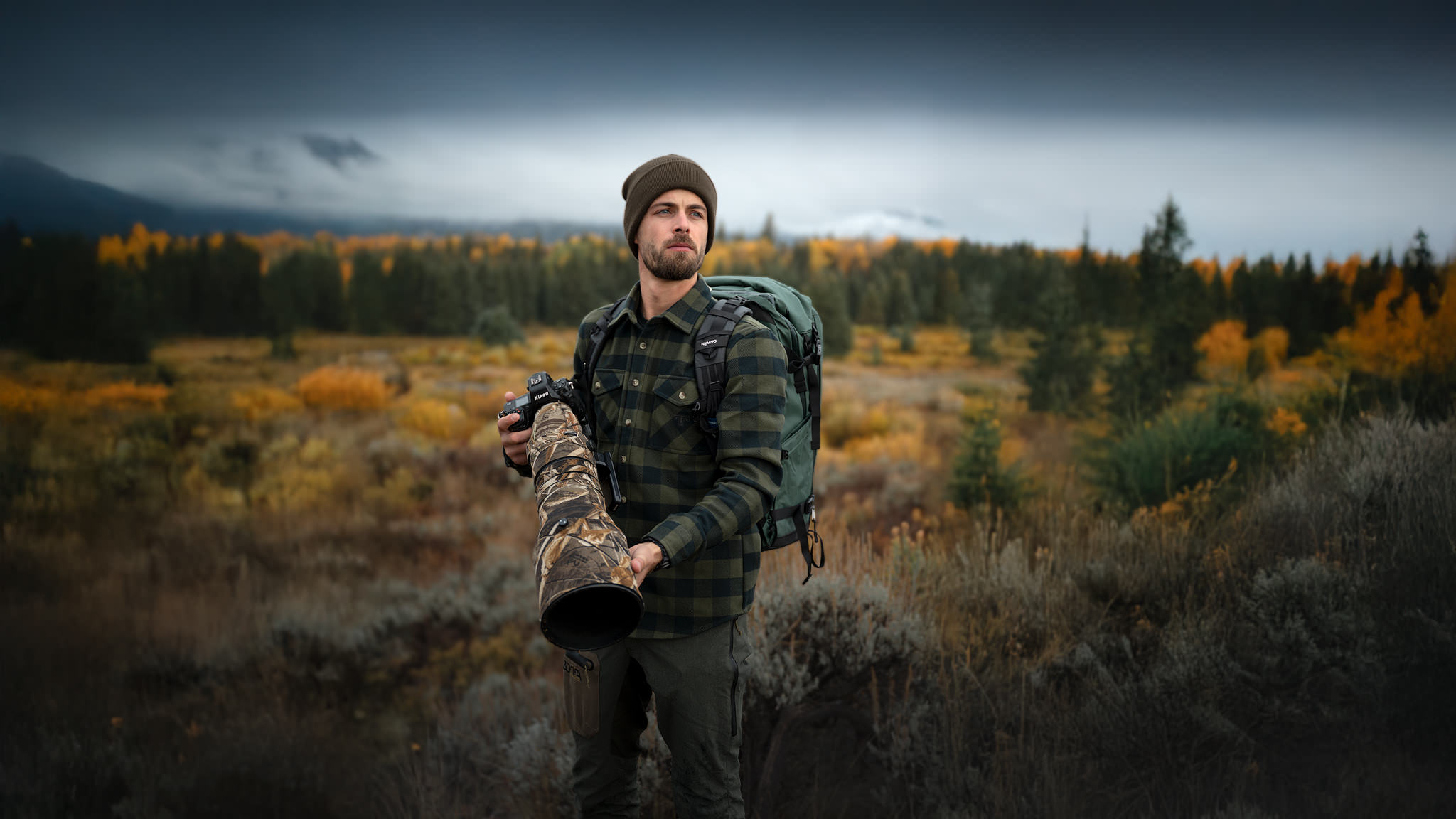
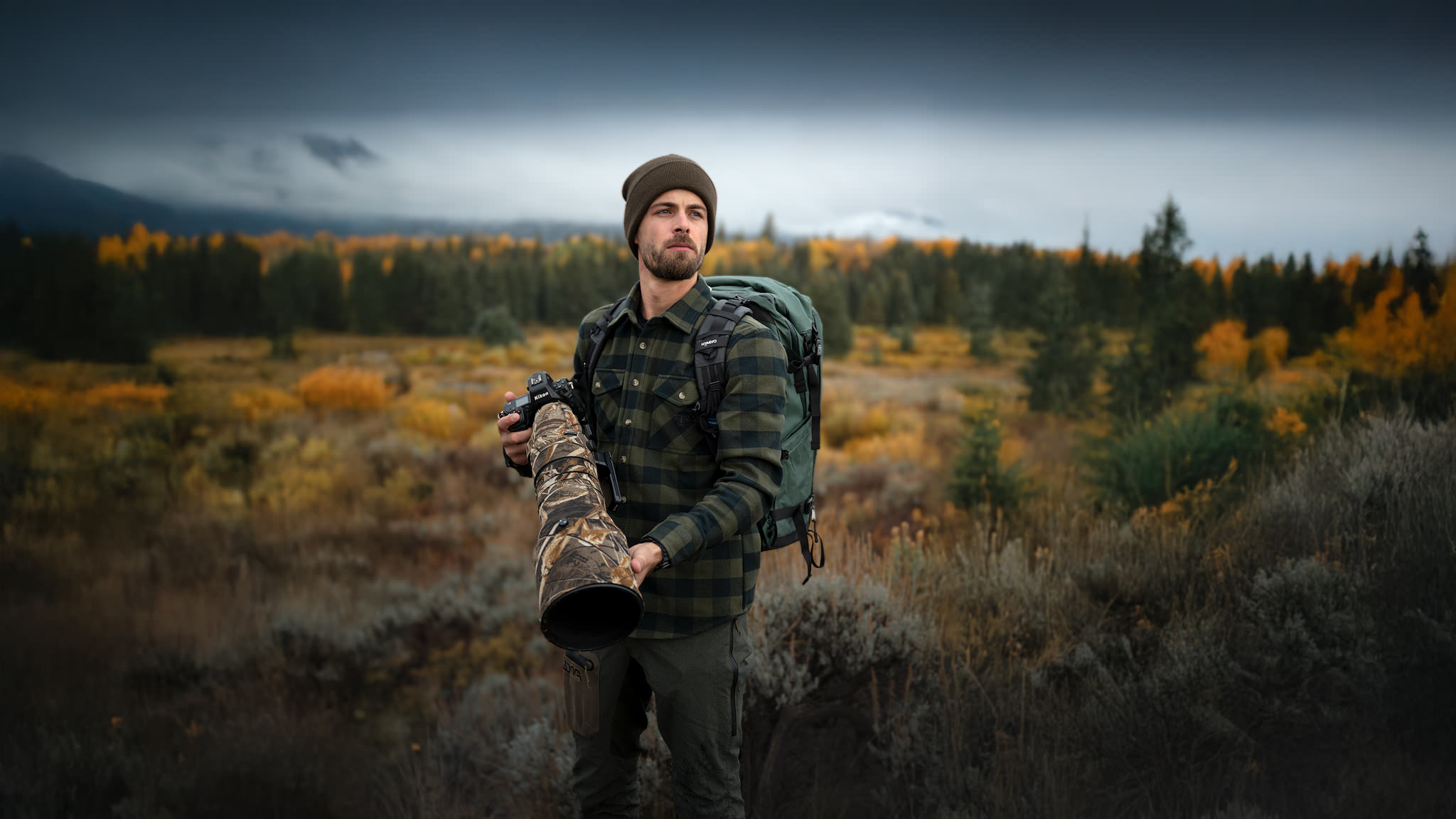
Over the years , I’ve also selected a series of garments and accessories that I actually use in the field in conditions like these, choosing only what I consider reliable in terms of comfort, protection, and practicality. For those who want to learn more, I’ve compiled my complete setup for Norway on a dedicated page, detailing the products I use and why I consider them ideal for this type of experience. This setup also includes some products and brands that I regularly use in the field, such as AKU, Scott, and Zotta.
FIELD LOADOUT
My setup for Yellowstone
Technical clothing, shoes, gloves, glasses, backpack and photographic setup: on a dedicated page I have collected the equipment that I actually use in the field to tackle Yellowstone in autumn between the cold of the morning and constant moving and traveling wildlife photography.
Open the full loadout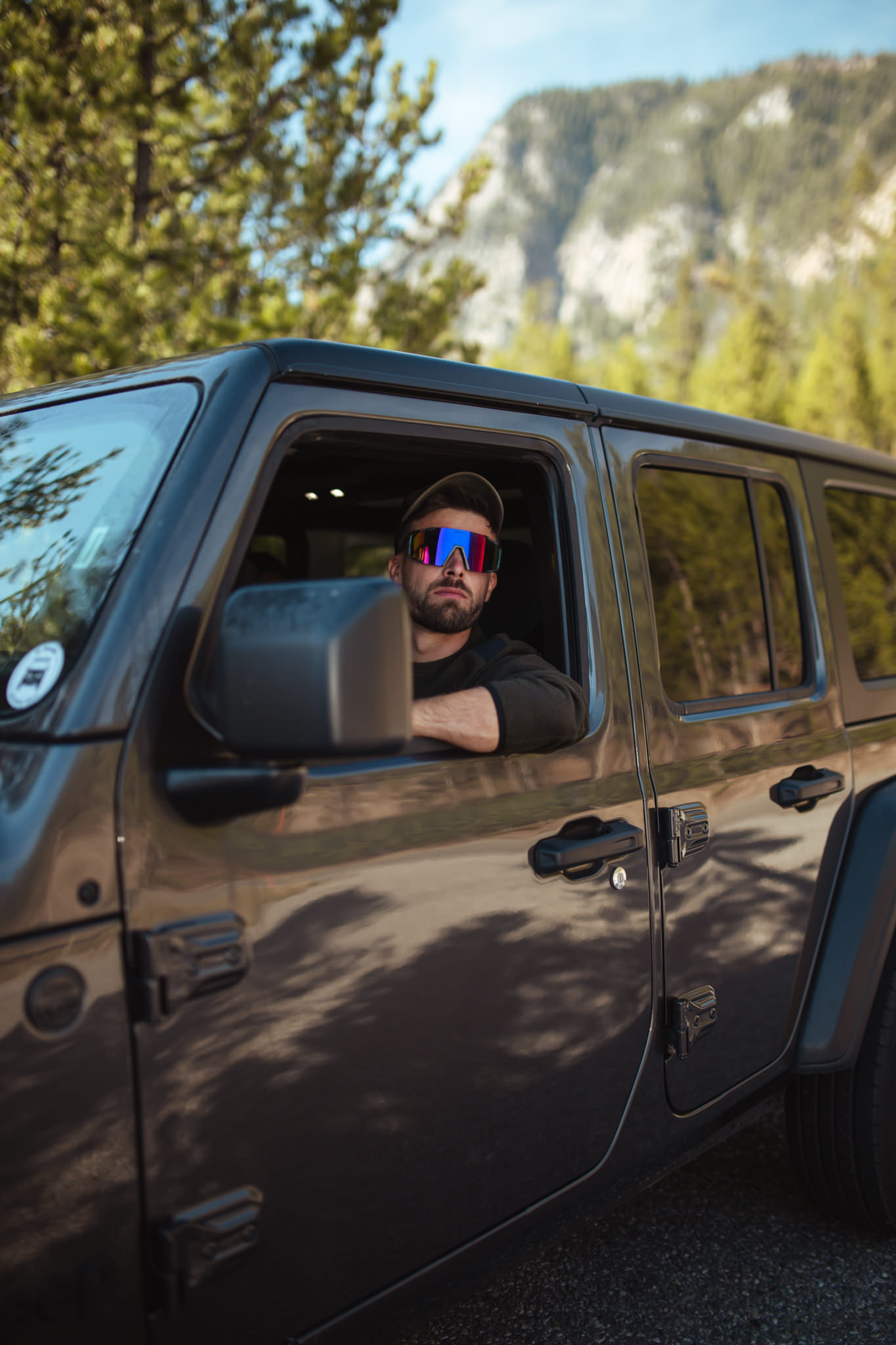
The journey that remains
Leaving Yellowstone National Park doesn’t just mean stepping outside its confines. It also means abandoning a rhythm of silent waiting, immense distances, and a nature that never fully surrenders.
Experiences like this leave something that goes beyond the shot. They remind you that the value of a trip lies not only in what you capture, but in the way a place like Yellowstone forces you to shift perspective. To slow down, as the steam from the geysers slowly rises. To make room for anticipation, when wildlife remains hidden in the forests or along the rivers. To confront times you can’t control.
We don’t always set out just to observe. Sometimes we set out to truly immerse ourselves in an environment, to understand its silences, to feel small before seemingly infinite landscapes.
And perhaps this is precisely why animals like wolves and bears continue to exert such a strong fascination: because they are not easily found, and precisely for this reason every encounter becomes something rare, almost unrepeatable.
WORKSHOP
Want to have a similar experience in the field?
If this story has impressed you, on the dedicated page you will find all the information about Yellowstone & Grand Teton Fall 2026: A photographic journey through large mammals, iconic landscapes, and autumn light in the heart of the American West.
Discover the tour