

A journey through snow, wind, and the large mammals of the North, told from the perspective of those who seek them out and photograph them in the field.
The musk ox is one of those animals that, when observed in its natural habitat, instantly conveys the essence of the land it inhabits. In Norway’s Dovrefjell National Park, encountering one isn’t just a photographic opportunity, but a complete experience, filled with open spaces, often unpredictable conditions, and a constantly challenging climate.
You find yourself immersed in vast, silent landscapes, where the presence of the musk ox seems almost timeless, perfectly integrated into an environment that requires constant adaptation. It’s no easy task: the distances to maintain, the wind, the cold, and the variable light make each situation unique, forcing you to constantly reassess your approach.
In this article, I want to explain what makes this encounter so intense, the real challenges encountered in the field, and the photographic approach I’ve found most effective for working in these conditions, always seeking a balance between storytelling, respect, and authenticity.

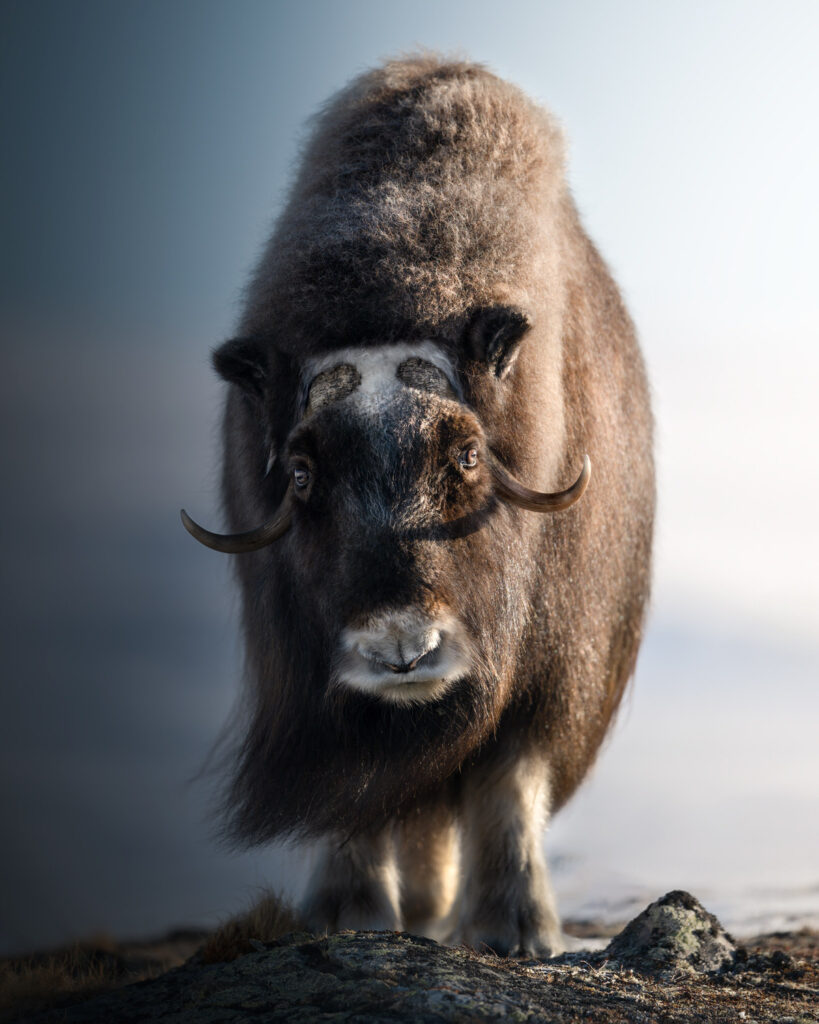
Why this experience is so special
There are experiences that go beyond the simple sighting, and that of the musk ox in Norway is one of them. Its charm comes not only from its imposing appearance or its ancient history, but above all from the context in which it is encountered: open landscapes, often harsh climates, constant wind, and a pervasive sense of being in a still-untouched environment, little altered by human presence.
From a photographic perspective, what I find most interesting is the balance between the subject and the landscape. The musk ox isn’t an animal that’s limited to the portrait: it’s often the relationship with the surrounding space that gives strength to the image, more fully conveying the atmosphere of the place. Inserting it into the landscape, allowing the environment to tell part of the story, allows for the sense of silence, harshness, and depth typical of Nordic regions to be conveyed.
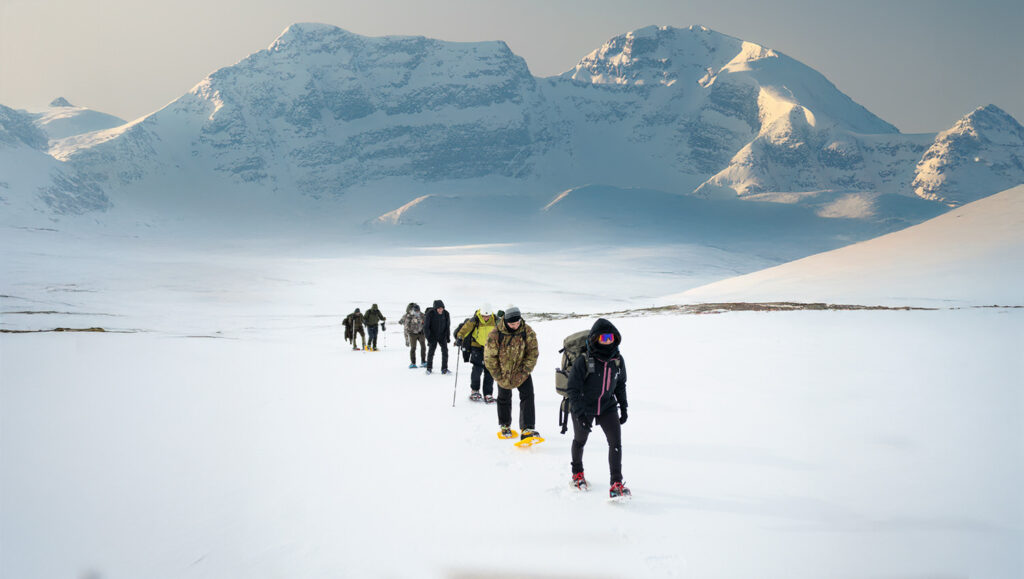
Best time and most attractive conditions
The time of year I find most interesting for this experience is winter, when the landscape becomes simpler and environmental elements become an integral part of the photographic narrative. In Norway, the snow, grazing light, and cold atmosphere contribute to creating more essential, clean images, in tune with the musk ox’s character.
At the same time, it’s precisely these conditions that make everything more challenging. Frigid temperatures, constant wind, and moving across snowy terrain are part of the experience and contribute to much of its intensity. It’s not just about observing or photographing, but about constantly adapting to an environment that doesn’t allow much.
From a photographic perspective, however, it is precisely this relationship between subject and context that gives strength to the journey. The musk ox seems to belong entirely to that landscape, and each image manages to convey, even if only partially, the sensation of being immersed in an austere, silent environment, profoundly consistent with its presence.


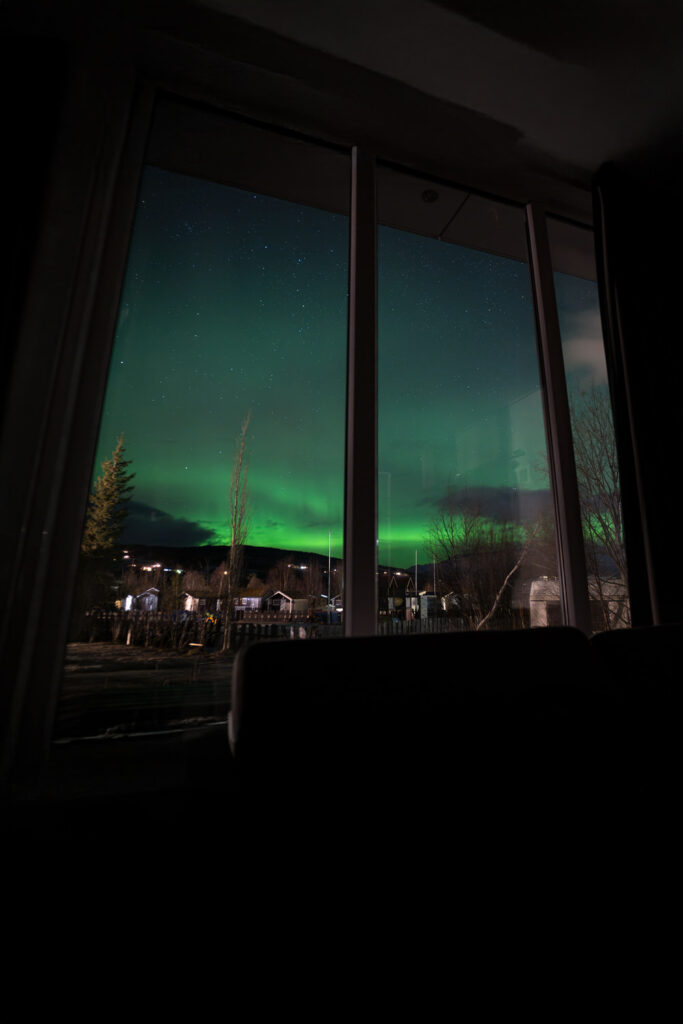
What to really expect on the pitch
One of the most important things when undertaking an experience like this is to have the right expectations. A musk ox encounter in Norway shouldn’t be thought of as a simple shoot or a guaranteed outcome. Many variables come into play: weather conditions, travel, search times, observation distances, physical exertion, and the need to continually adapt to the context.
It’s an experience that requires presence and a willingness to embrace unpredictability. Walking for a long time, waiting, reading the landscape, and interpreting the environment’s cues are integral to the process. Authentic nature photography rarely follows linear patterns, and for this very reason requires a different approach, less focused on control and more on listening.
Beyond enthusiasm, patience, clarity of mind, and the ability to stay focused even when conditions get tougher or less favorable are essential. It’s in these moments that the experience is truly built, even before the final shot.

How I approach this experience photographically
From a photographic perspective, the first fundamental aspect is the ability to read the context. Equipment alone isn’t enough: you need to interpret the light, anticipate the subject’s possible movements, carefully manage distances, and quickly decide what type of image to construct. Sometimes it makes sense to focus on a portrait; at others, it’s more effective to open up the frame and leave room for the landscape.
Personally, I find it very stimulating to work flexibly, continually adapting my approach to the situation. There are conditions in which musk oxen lend themselves to tighter, more intense images, but often it’s the context that really makes the difference. When light, snow, and the environment balance each other out, the shot gains depth and more powerfully conveys the character of the experience.
Exposure management also becomes a crucial factor, especially when there’s snow or strong contrasts. In these situations, it’s easy to be fooled by the ambient brightness, losing detail or atmosphere. Maintaining control over the scene’s interpretation, seeking a balance between light and shadow, is essential to obtaining clean images that reflect the impressions experienced in the field.

In a context like this, ethical considerations come before any shot. The musk ox is an animal that requires respect, attention, and the ability to read. Observing it means knowing how to interpret its behavior, maintaining the right distance, and always adopting a cautious and non-invasive approach. The goal is never to force the situation, but to construct authentic images within a balanced interaction with the environment and the fauna.
For me, good nature photography isn’t measured solely by the visual result, but also by the way the image is captured. This principle becomes even more important in open and harsh environments, where every choice matters and where animals require awareness, sensitivity, and constant respect.

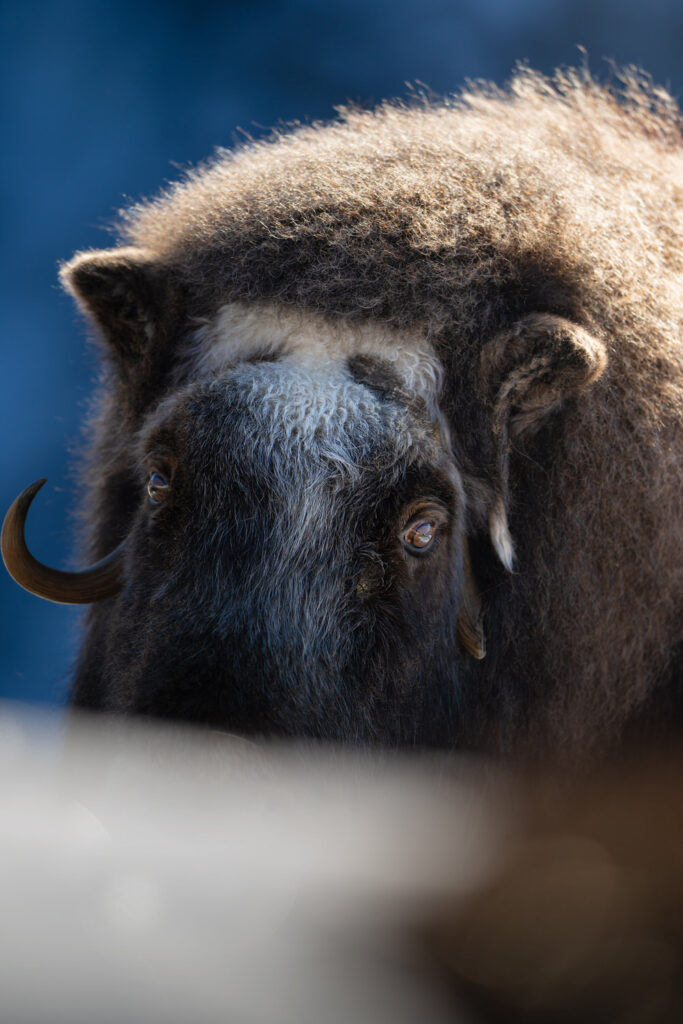
Useful equipment
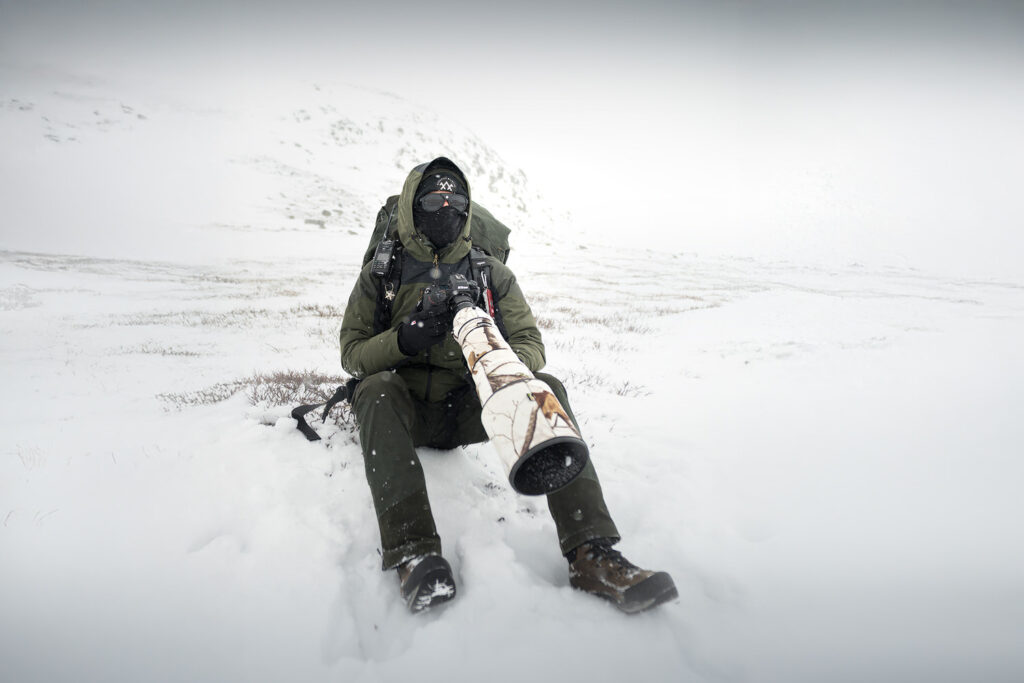
To best tackle an experience like this, it’s essential to think about your equipment in terms of versatility. A super-telephoto lens is almost always the best choice, as it allows you to maintain the right distances and adapt to a wide range of situations without interfering with the animal’s behavior. At the same time, having a shorter focal length can prove invaluable when the landscape becomes an integral part of the scene, decisively contributing to the image’s construction.
Alongside the strictly photographic aspect, elements that are often overlooked but equally crucial come into play. Clothing and accessories, in a context like the Norwegian winter, are not mere details but an essential component of the experience. Cold, wind, and snow directly impact the ability to stay focused, move effectively, and manage the various situations that arise with clarity.
For this reason, preparing properly means going beyond choosing the right camera and lenses: it means creating the conditions for working well in the field, maintaining comfort, focus, and continuity even when the environment becomes more challenging.
MY CONFIGURATION FOR NORWAY
Over the years , I’ve also selected a series of garments and accessories that I actually use in the field in conditions like these, choosing only what I consider reliable in terms of comfort, protection, and practicality. For those who want to learn more, I’ve compiled my complete setup for Norway on a dedicated page, detailing the products I use and why I consider them ideal for this type of experience. This setup also includes some products and brands that I regularly use in the field, such as AKU, Snowfoot, and Zotta.
FIELD LOADOUT
My setup for Norway
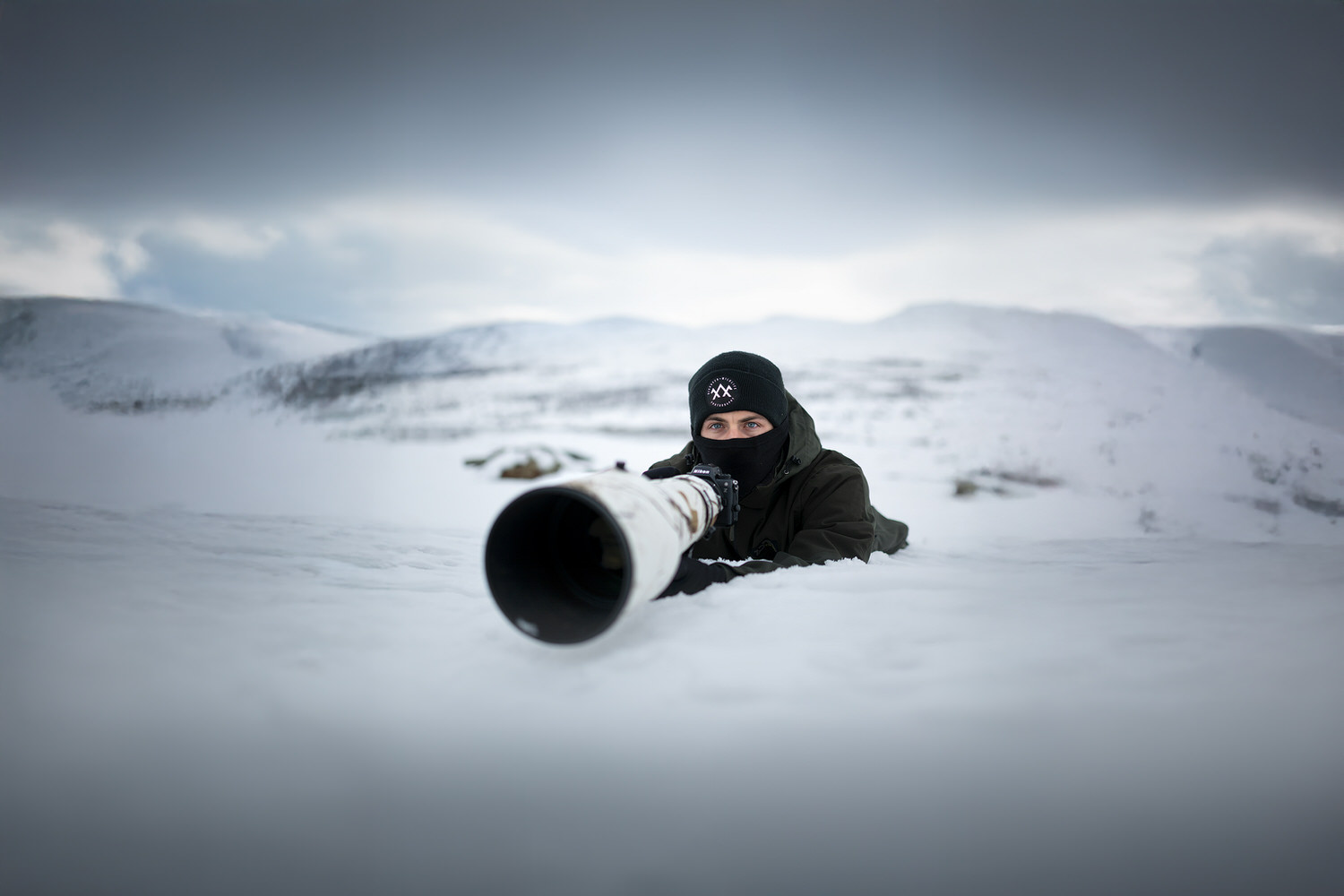
Technical clothing, boots, gloves, accessories and photographic equipment: on a dedicated page I have collected the equipment that I actually use in the field to face different environments, seasons and conditions during my photographic trips.
Open the full loadout
Why keep coming back to Dovrefjell?
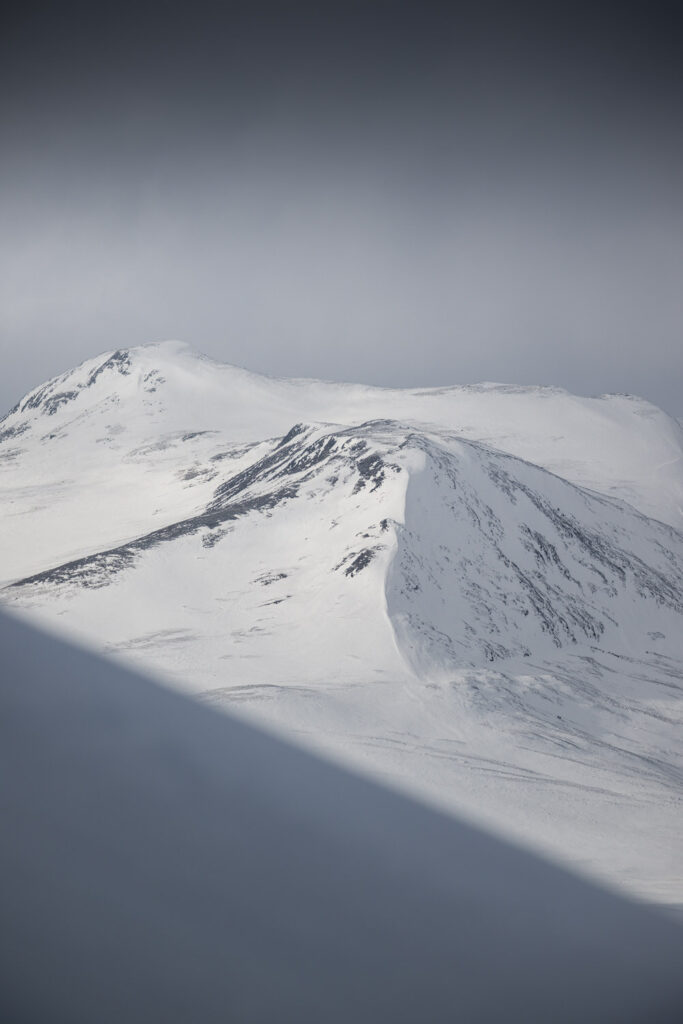
Personally, I’m deeply connected to winter environments and large mammals, and it’s precisely this combination that makes this trip so interesting for me. There’s something powerful about being in an open, harsh, and often silent space, where each encounter must be crafted with patience, attention, and the ability to adapt.
At the same time, I find itinerant photography extremely engaging. Although it requires effort, a willingness to face the unexpected, and little certainty about the outcome, that’s precisely what makes it so captivating. Every day remains open, never entirely predictable, and even returning to the same place multiple times, you never feel like you’re experiencing something you’ve already seen.
You’re constantly searching for the next shot: a different situation, a different light, a different context, an animal in a different position. And it’s precisely this constant doubt, this possibility of each time creating a stronger, cleaner, or more intense image, that keeps the desire to return to the field alive.
For me, the value of an experience like this lies not only in the photographs you bring home, but also in the way it forces you to observe more closely, to move with greater awareness, and to truly connect with the environment. It’s this balance of exploration, effort, and wonder that makes the trip to Norway something I continue to look back on with great interest.
WORKSHOP
Want to have a similar experience in the field?
If this story has touched you, you can find all the information about the photography workshop in Norway on the dedicated page: an experience built around large mammals, winter environments, and mobile photography.
Discover the workshop